“You’ll remember this conversation when you’re standing before the lord?“
It was phrased as a question but it felt like a threat. It also finally brought the tirade to a close.
I was in the mechanic’s workshop behind the Pentecostal mission. I was chatting with the Pentecostal minister and another Pentecostal faithful, a white guy. They were working on fixing a quad—a four-wheel all terrain vehicle, they’re very popular up here.

We’d been saying something about the weather and I’d mentioned climate change. They’d insisted it wasn’t real.
Walking fearlessly towards controversy, I replied that surely these days climate change wasn’t controversial anymore? You just needed to look at historical weather data to see the average global temperature was increasing steadily.
“Well how far back do those records even go?”
One of my interlocutors replied.
I made a judgement call here. This was just some guys shooting shit in the workshop so it wasn’t worth getting in to the Pleistocene-Holocene transition and variance in variability between geological epochs. Let’s just stick to the safe, easy terrain of stable climate trends in the Holocene. So I said,
“Well, we’ve got good records for the last ten thousand years.”
That’s what kicked it off. Ten solid minutes of two-man tag-team tirade. The world was only ten thousand years old because their god wouldn’t lie to them. Evolution was a conspiracy by atheists to deny accountability for the stains on their souls. They certainly weren’t related to any monkeys. Then, with an inquiring admonition to think back on this when face to face with universe creating powers, we went right back to quad-fixing banter.
I’d known people were quite religious up here, but I honestly hadn’t expected young earth creationists. I’d thought they were almost extinct. I’d been wrong. I’ve since looked up the data and, in the latest 2012 survey, about 22% of Canadians had claimed the earth was created recently by a god.
I guess I’ve been living in a secular, academic bubble. People with similar beliefs cluster together. Before I’d clustered with the science-trusting types and now I’m living in a very different cluster at the other extreme of the distribution.
This was my first ever experience of being admonished for thinking the world was too old. It made me realise it was high time I learned about the town’s churches.
I read a book a few years ago. The Churching of America. It’s a fascinating economic analysis about how different religious sects and churches compete for followers. They employ different kinds of ceremonies, techniques, different ways of tapping into emotions and spreading beliefs. Different techniques worked in the large established cities in the American east—the sombre cathedrals and dry, droning ceremonies of the Catholics—than in the wild, sparse, westward spreading frontier—the visceral intensity of Baptist revival meetings, for instance. As decades passed and successive frontiers were civilised and grew dense, so too shifted the relative frequency of different religious beliefs, practices, of different churches, of numbers of pews in churches and of numbers of butts in the pews. Intensity, novelty and extremity worked on the frontiers of civilisation but less so at is core. The book has many other fascinating insights and I recommend it.
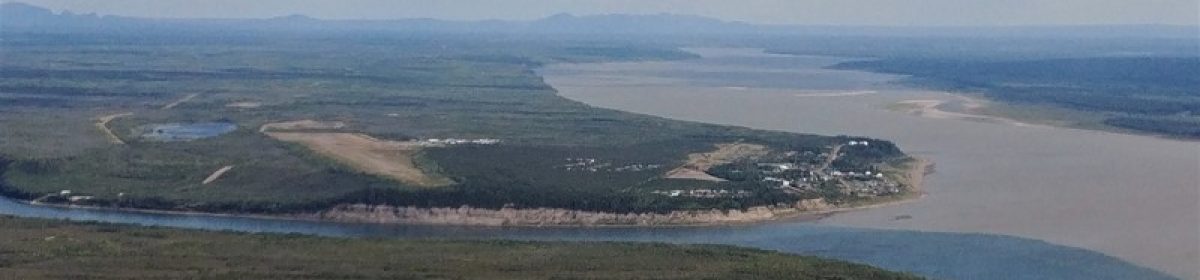
North America has been densely settled now, but our town is still sitting at the least accessible edge. There are three churches in town.
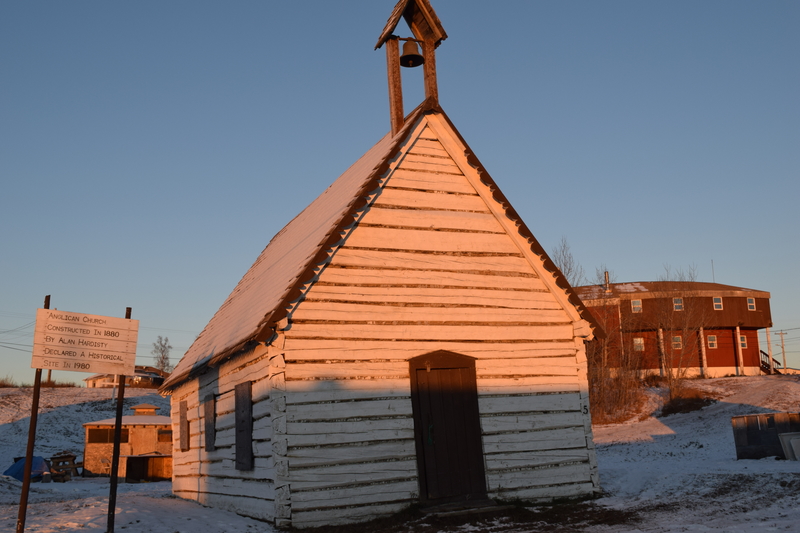
The first is the old abandoned Anglican church. The only historical site in town mentioned in the only guide book (a guide to canoeing the Mackenzie river) that mentions us. I’ll look in to its history.
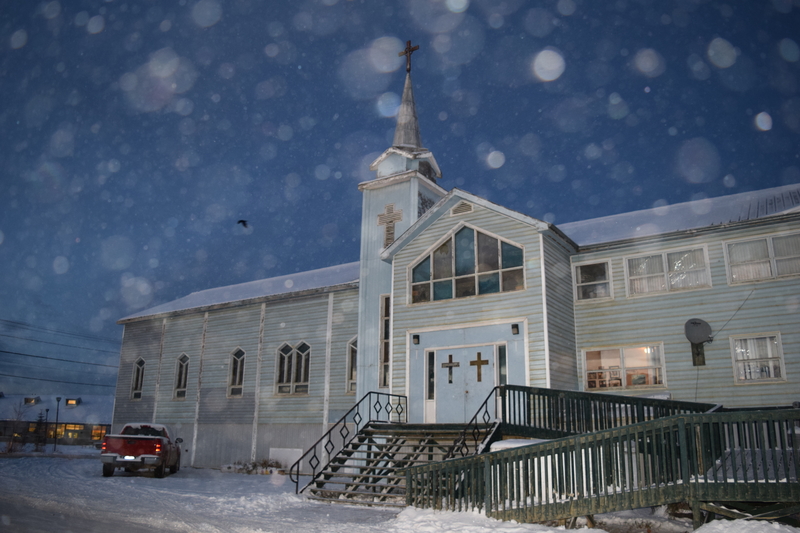
The next is a catholic church. It’s run—has been since 1979—by Sister Celeste. She has won multiple awards for her service to the community, including the 2016 St. Joseph award and the 2008 Prime Minister’s Awards for Excellence in Early Childhood Education.
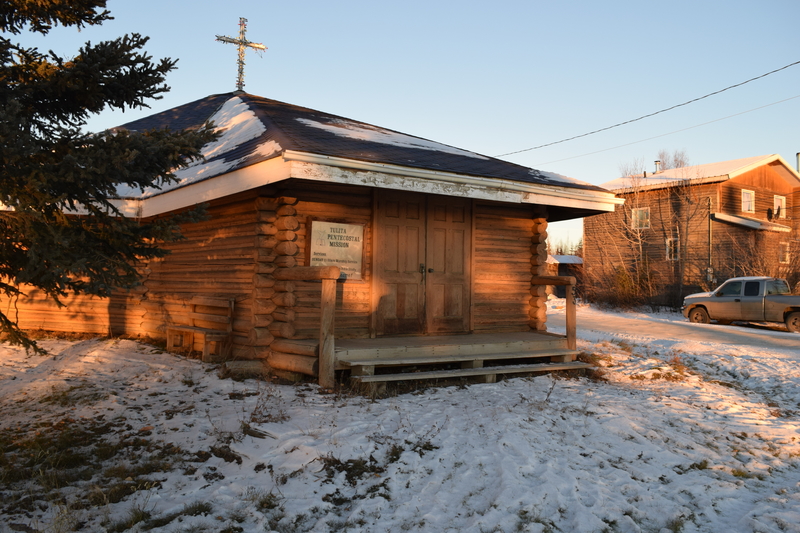
The final church is the Pentecostal mission. The Pentecostals are known for biblical literalism and “charismatic” practices like speaking in tongues faith healing. Their leader—Troy, I’m not yet sure if he’s called a minister or a preacher or what the difference is—is a brash young guy. He’s the one who was telling me all about how silly evolution was because the world was too young for it.
I’ll attend the catholic and Pentecostal ceremonies—they’re on at the same time so it’ll take a couple of Sundays—and record them as accurately as I can here.
There’s also a young theologian who just moved to town—he’s doing a Masters of Theology—with his daughter and his wife, who teaches at the local school. I’ve met him once—at the school’s thanksgiving feast—and we had a very nice conversation about the history of the reformation. He seems like a bright, interesting, historically well-informed guy. He’s starting a bible study group soon “with the aim being to accurately understand and apply Scripture.” I’ll attend that too. Perhaps he’ll have a more academic, historical perspective on the communities and practices here.