Hydrology

Written by:

The Mackenzie River is the longest river in Canada (10th longest in the world), running 4,241 km from the Great Slave Lake to the Arctic Ocean. Its watershed is the largest in Canada, encompassing 20% of the country, but only about 1% of the population. The river discharges more than 325 cubic kilometres of water each year, accounting for roughly 11% of the total river flow into the Arctic Ocean. Here is a map of the watershed:
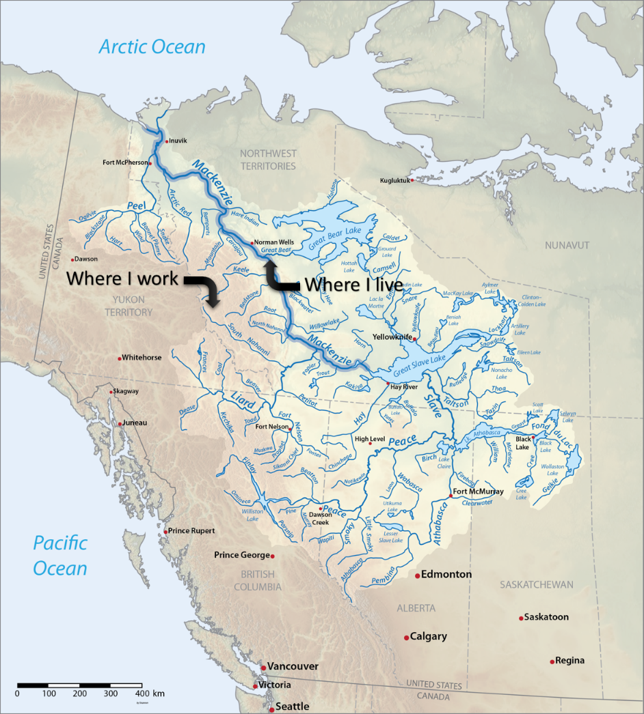
mackenziemap1

The entire main stem of the Mackenzie River is undammed. The Government of Canada Water Office has a records of the daily flow rates since 1943 and water levels since 2002, which I have graphed for your convenience.
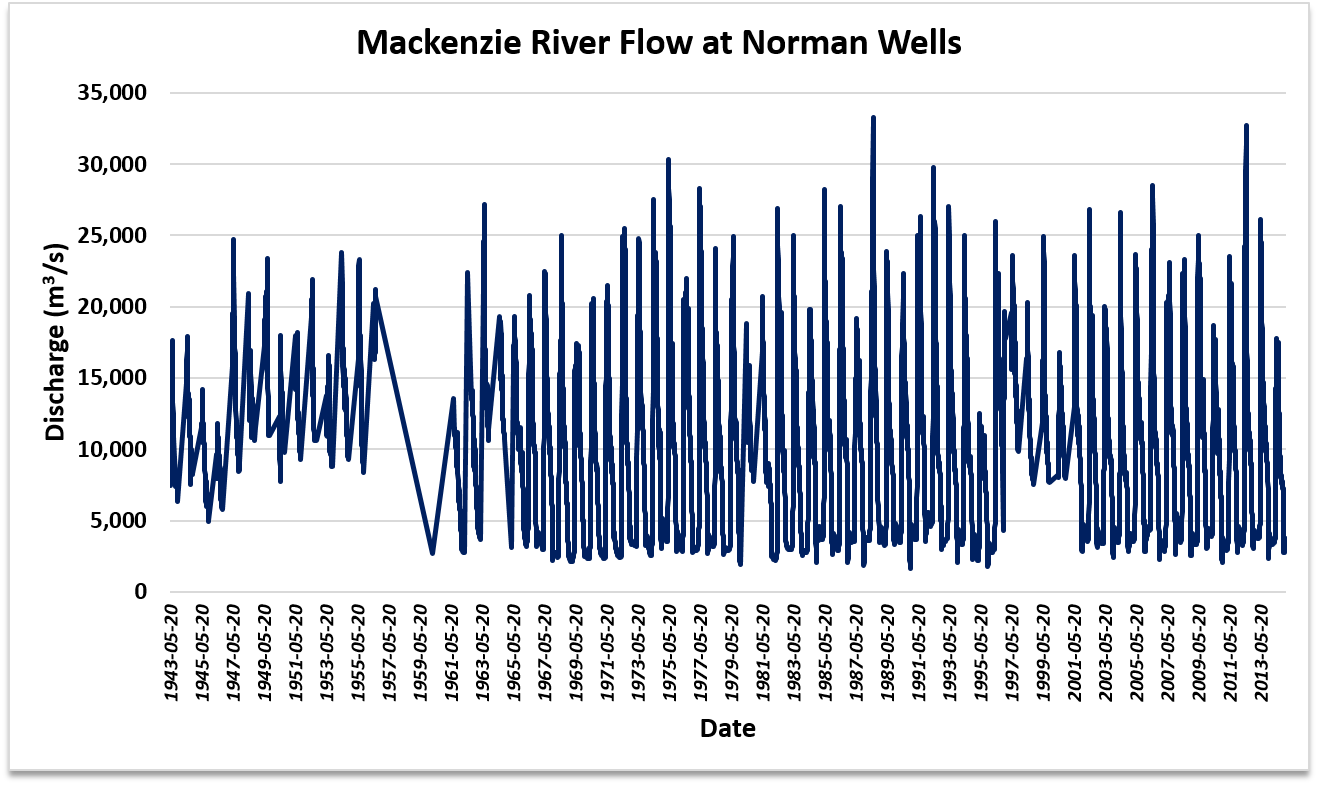
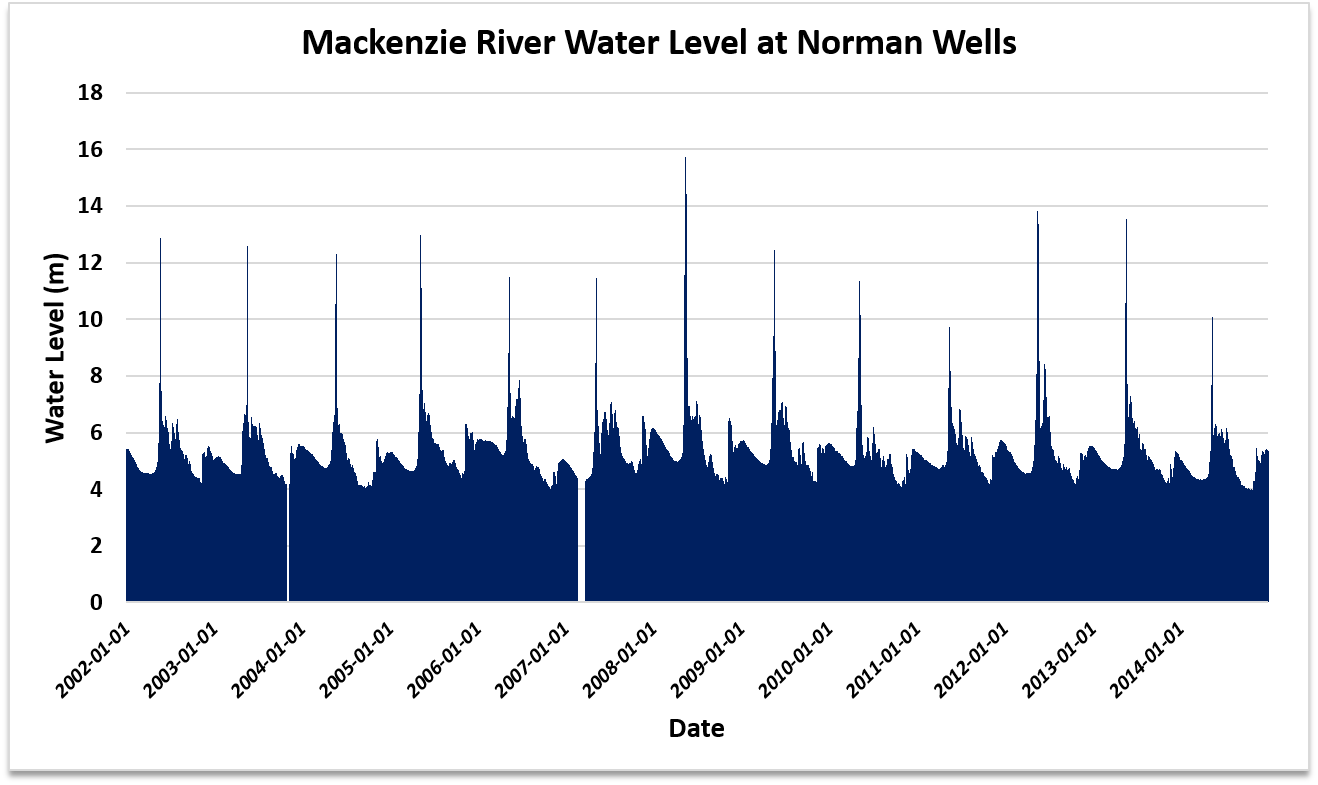
nwflow  nwlevel

Let’s zoom in onto one year to see what’s going on.
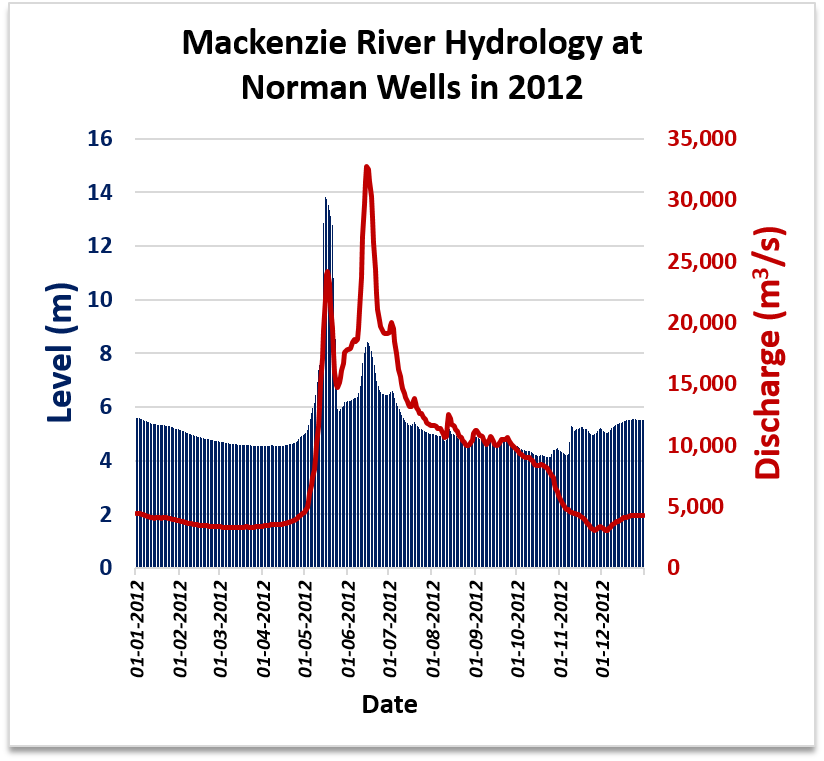
nwhydrology2012

The ice break-up on the Mackenzie occurs in May, with peak flow between May-July. Water levels peak sharply in May for a brief period of time.

NWT Geography

Written by:

Canada’s North is large and sparsely populated. There are about 44,000 people living in the Northwest Territories, spread over 33 communities – although roughly half the population lives in Yellowknife. This is over an area of 1.35 million km² (Yukon has 34k people over 0.5 million km²; Nunavut has 32k people over 2 million km²). Perhaps unsurprisingly, people south of 50°N don’t know much about what’s going on up here. Here’s a quick NWT geography lesson, in FAQ form.

Where are you moving to again? Toledo?

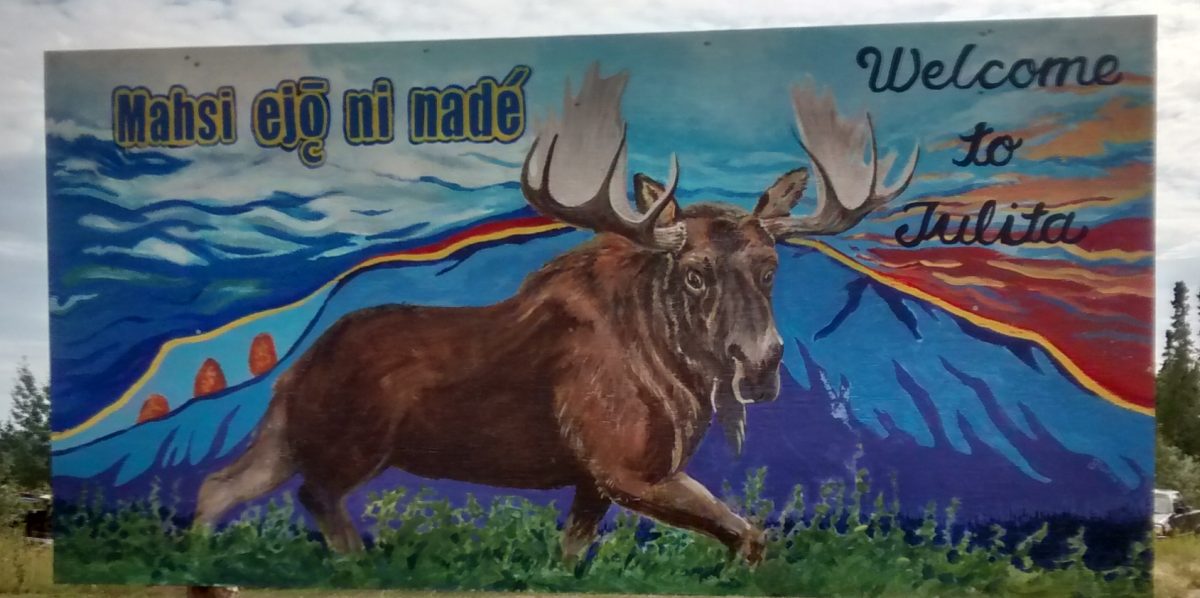
Tulita. Toledo is in Ohio.

Are there roads there?

There are roads within town, but you can’t get very far on them. There’s a winter road system that’s open from ~January to ~March every year. Here’s a map of the NWT road system: 

Are you north of the Arctic Circle?

Not quite. You can see on the map above that we’re still a bit south of the Arctic Circle.

Are there trees there?

Yes there are. The treeline goes quite far north around here, so we are solidly within boreal forest:

Is it flat there?

We live on the cusp between where it is pretty flat and where it starts to get mountainous. As you can see on the map above, to the east of us it is flat, and to the west are the Mackenzie Mountains. The park is located fully in the mountains: 

Is the ground permafrost?

Yup:

Are there polar bears there?

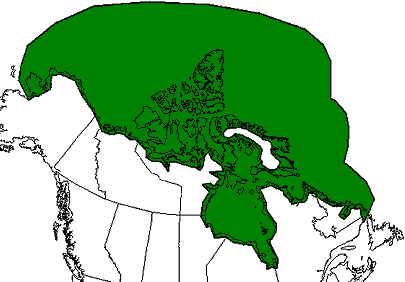
No, there are not. This is where polar bears live:polar-bear-range

We hope this answers some of your burning questions!

The Canol Trail

Written by:

In my previous office in Vancouver, there was an old map of western Canada on the wall which went as far north as the territories. This map had a few divergences from, say, Google Maps, and one notable difference was that this map had a road drawn on it from Norman Wells across the Mackenzie Mountains to Ross River in the Yukon.

But no such road exists… or does it?!?

The second time I encountered this strange feature was at the museum in Yellowknife. This time, the map indicated a summer road from Ross River to the Yukon-NWT border and then a dashed line indicating a trail the rest of the way through to Norman Wells. I asked the museum staff what this was all about, and this was where I first learned of the Canol Trail.

During the Second World War, the American military was keen to build a pipeline from Norman Wells to Whitehorse to supply oil to the Alaskan front, so they funded the CANOL (Canadian Oil) project. 225,000 tons of equipment was brought up by river and portage, and the construction involved tens of thousands of people and took 15 months to complete. The war then ended a year later and the pipeline and road were abandoned, with many structures and equipment left behind.

The Yukon maintains their side of the road in the summer, but the 355 km on the NWT side is a hiking trail that is considered one of the most challenging and remote in Canada. Many people who start the trail are unable to finish it, usually turned back by high water levels at the river crossings (the bridges are long gone). It takes two to three weeks to hike and usually requires a food drop. History, wilderness, and challenge – everything I like in a hike. Any takers?

Further reading:

There’s hiking, and then there’s the Canol. Possibly North America’s most rigorous backpacking trail, this 355-kilometre trek follows the route of a defunct military road that once transected the Mackenzie Mountains. Tackling it is an exercise in self-sufficiency and endurance: Most hikers require three weeks to make it to Norman Wells, carrying food, survival gear and an inflatable raft to cross numerous swift, glacier-fed rivers.