So we bought a snowmobile from the guy who did Faye’s job before her. You might remember that I built it a home.
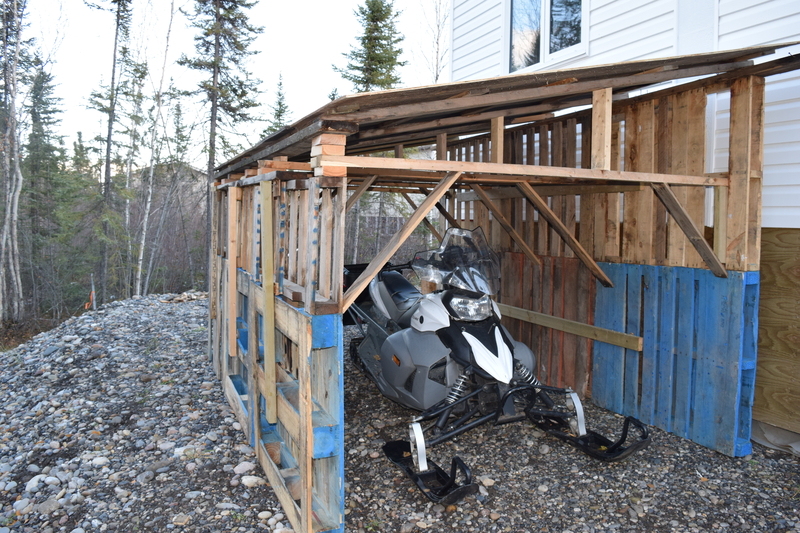
Tulita’s pretty dry, so for a long while there wasn’t enough snow to actually take it out. But come mid-January some snow had fallen and it was time to ride!
First up, it’s heaps of fun. 500cc, so out on the winter road you can easily get it up to the 80-100km zone. But like a mountain bike your body weight positioning has a big effect on how it rides. Unlike a mountain bike you can fully stand on the side rail and lean your entire body off of the thing side to turn it even harder. Also unlike a bike, you don’t need any cardio capacity to be able to go uphill, which suits me just fine. Pretty soon I was using it any excuse I got. I’d drive to the shops shop in town on it; use it to deliver Faye her lunch; take it to the gym, etc.
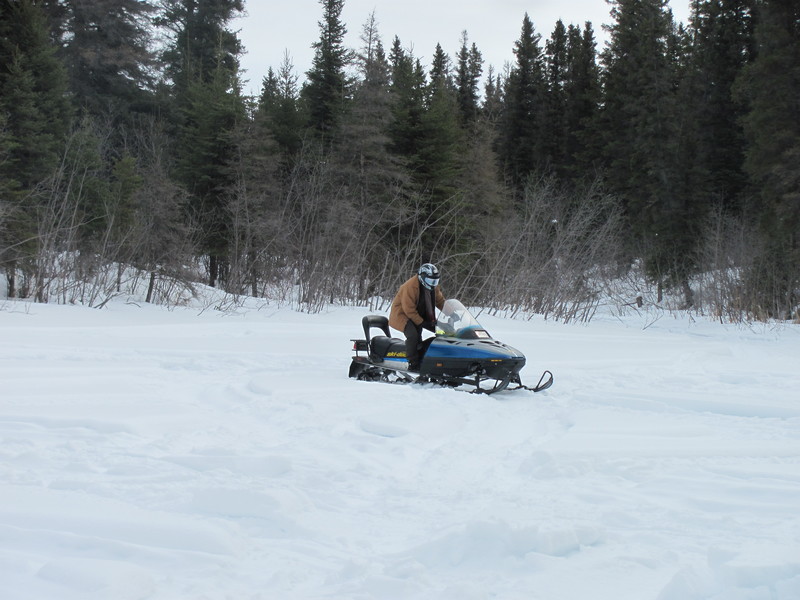
But it was only a couple of weeks before the problems started. At first, it would just take a lot of cranking to start it up. That’s normal, apparently, when it’s this cold. Then, instead of cranking over, it would just peter out when you turned the key. The engine would make a sad sound and the little electronic display would fade to nothing.
Probably the battery, right? We tried charging it, we tried using someone else’s battery, but the pattern was the same. Turned over fine for a ride or two, then died instead of starting next time.
So we bought a brand new battery. That worked for a week or so, but then suddenly an error light started flashing. Error number 49: electronics in the fuel injection system, according to the service manual.
I checked every single fuse in the damn thing but they were all fine. I charged the new battery (which was, surprisingly, flat now), cranked it up and suddenly the error light is off and it’s working beautifully. For one day. Then the error light’s back on, the battery’s flat, the electronics fade out when you try to start it.
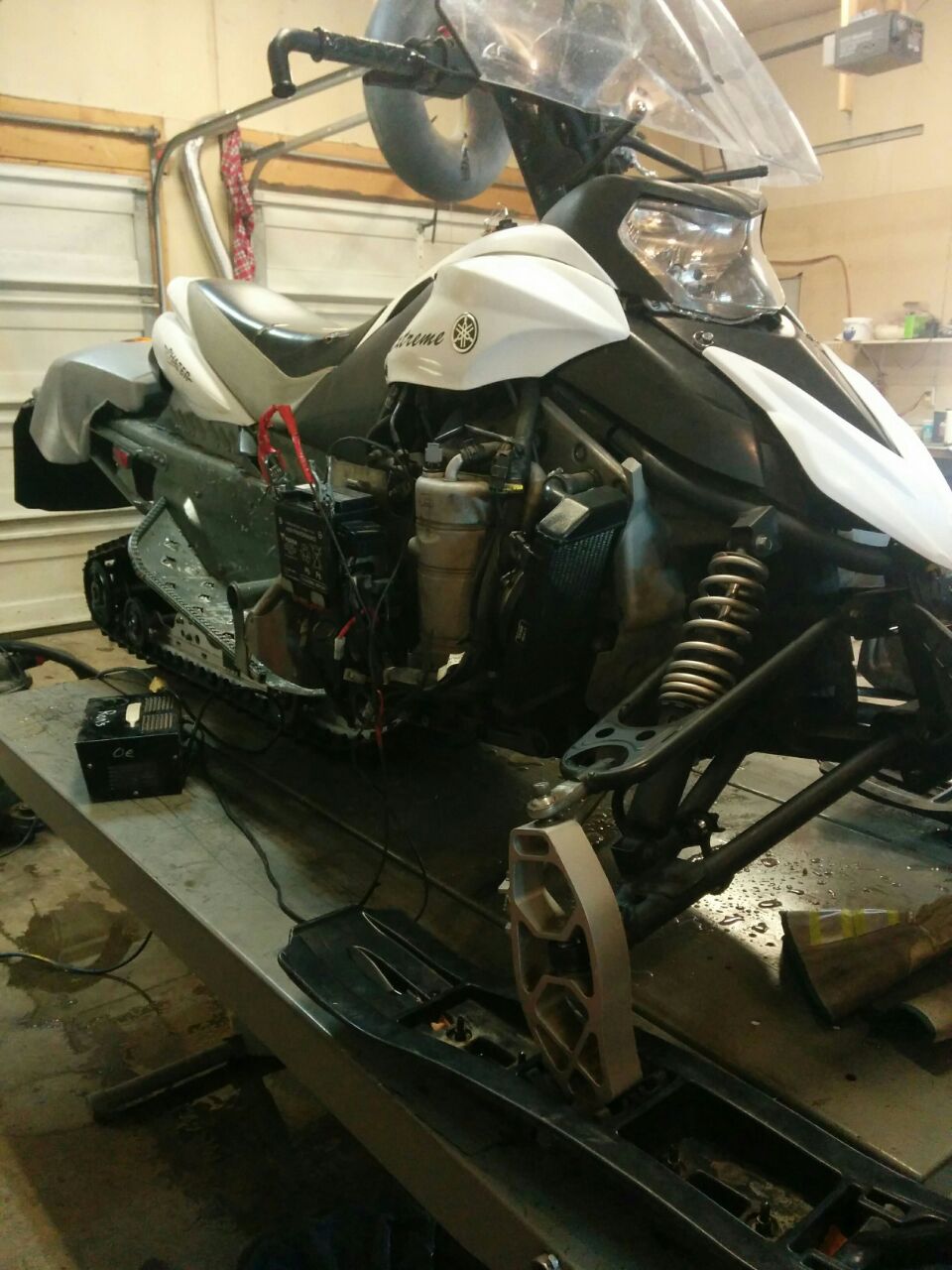
So, I took it in to the local workshop (out the back of the Pentecostal Church). With some help from the local engine guy I took it apart and figured out that the battery wasn’t getting charged by the motor.
I’ve since learned a bunch about engines and how they charge batteries. Here’s the short of it:
- The engine spins a ring of coiled wire (the stator coil) around inside a ring of magnets (the stator coil assembly)
- That generates alternating current, which is fed to the the rectifier/regulator (basically a collection of diodes) which turns it into a constant voltage direct current.
- That DC current gets set to the battery and presto, working engine.
Only three parts, so it’s should be easy to diagnose and fix, right?
I tested all the wires connecting those parts and they were fine. Since the stator coil rarely breaks and is deep, deep in the belly of the beast, the culprit was most likely the rectifier/regulator. I spent hundreds of dollars on getting a new one shipped in, replaced it and…
No change. Still not charging.
So it’s gotta be the stator coil. The trouble is, replacing that is billed as a 12 hour job by a professional mechanic down south. And I’m not a professional mechanic. And I’m not down south. It’s a big job.
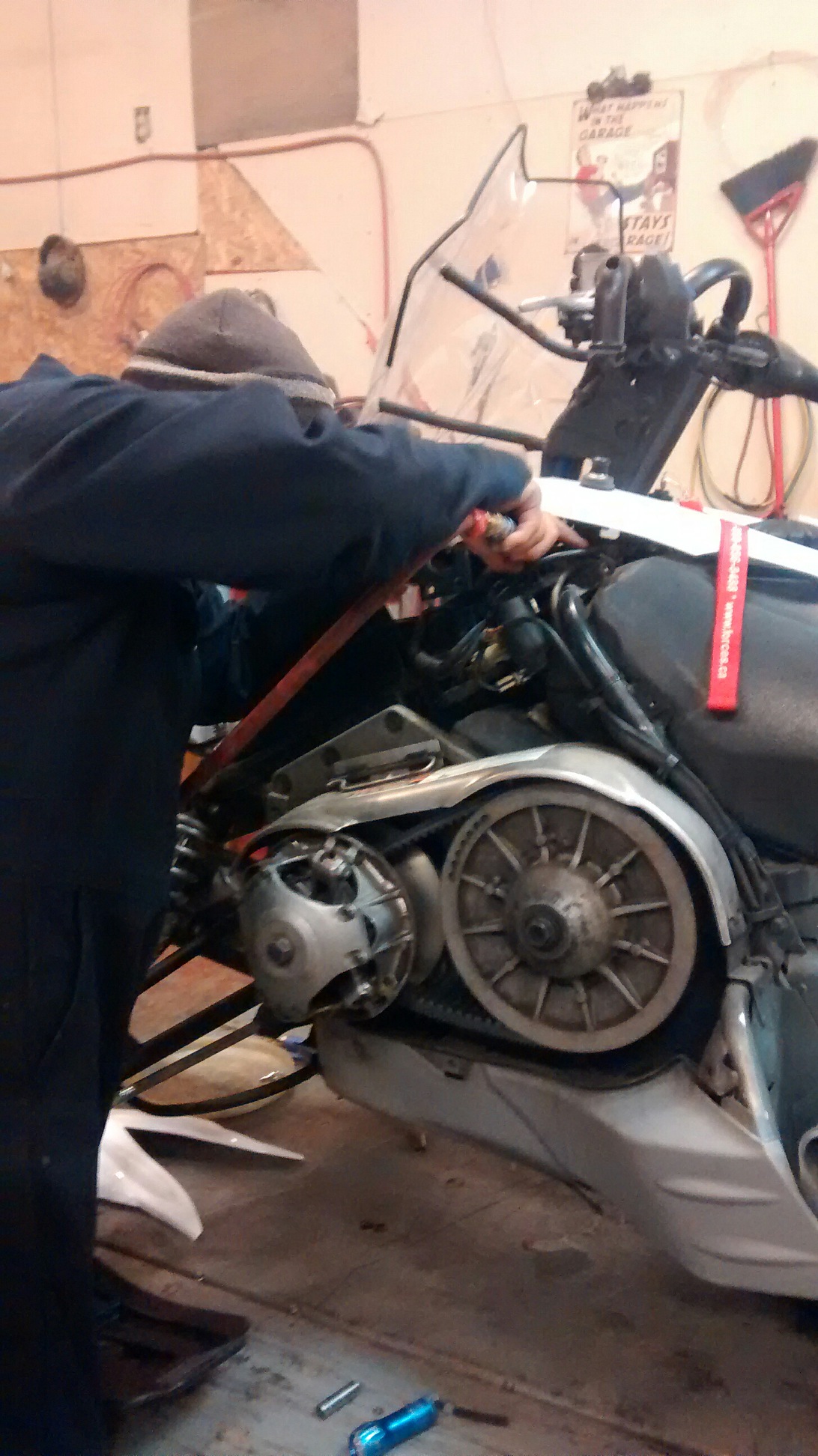
I decided to leave it for now and reconsider in the summer whether it is worth fixing this thing.
In the end I spent more time this winter trying to fix this damned machine than actually riding it. Apparently that’s not an uncommon experience for snowmobiles in remote locations.
Our case is especially bad, because Yamaha snowmobiles are made for people with access to a Yamaha mechanic. They’re far harder than other brands to disassemble, and they don’t have a pull-start in case of battery failure.
Lesson learned…